Not recognizing a debt does not mean you owe nothing, and it does not mean the debt is definitely yours either. Before doing anything else: do not pay, do not confirm personal information over the phone, and do not ignore the letter completely. Identify the sender from the envelope, then use the free, written debt-validation request the Consumer Financial Protection Bureau describes, which puts the burden on the collector to prove the debt is real and is yours before you owe them a response.
This page covers one thing: the letter in your hand and the return address it came from. It does not explain debt-collection rights in general. The CFPB and FTC already publish the authoritative version of that, and every rights claim below is a cited restatement of their guidance, not an original explanation.
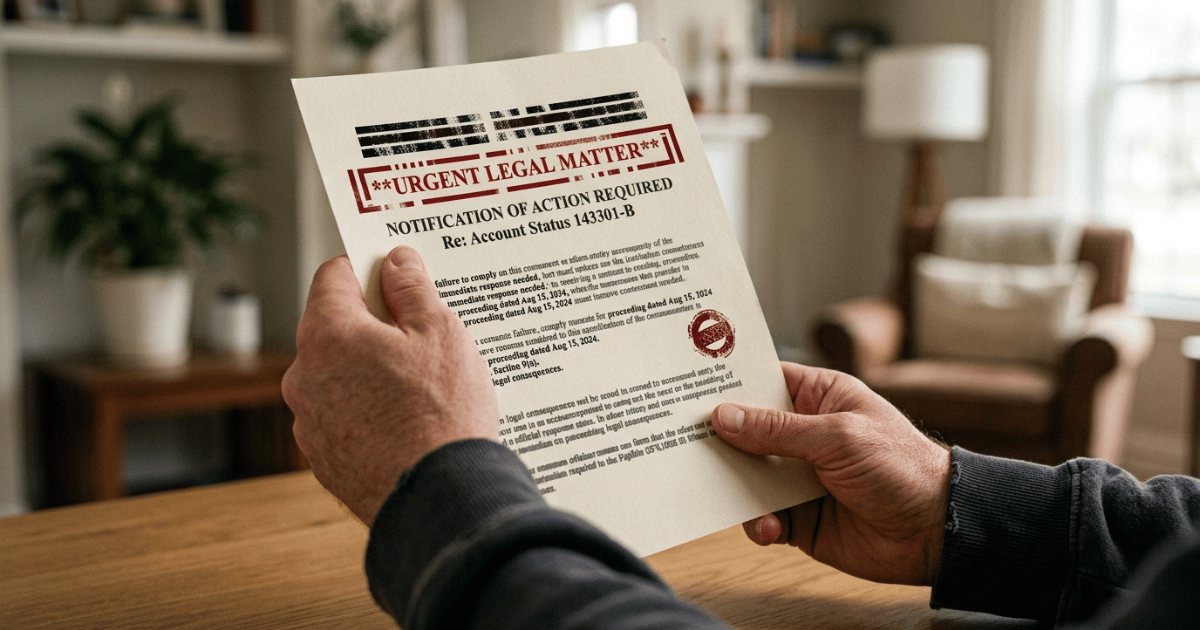
Start with the envelope, not the debt itself
Before deciding whether the debt is real, identify who is actually writing to you. A collection letter typically carries a PO Box return address, sometimes with a Dept number, and the company name printed on the letter may not be recognizable even when the debt itself is genuine, because debts are frequently sold to a different company than the one you originally owed. The identification method, including search techniques and the official USPS route, is covered in how to find out who owns a PO Box. Confirm the collector is a real, identifiable entity before deciding anything about the debt itself.
Why an unfamiliar debt can still be real
Several ordinary situations produce a debt that genuinely feels unfamiliar:
- The account was sold or resold. Original creditors routinely sell unpaid balances to debt buyers, who then sell them again. The name on the letter may be three or four steps removed from the company you actually had an account with.
- It’s an old account you forgot about. A small unpaid balance from years ago, especially one under a former name, address, or account type, can resurface as “new” mail even though the underlying debt is old.
- It belongs to a family member or a mixed-up identity. A shared last name, a similar address, or a data-entry error at some point in the collection chain can attach someone else’s account to your name.
None of these mean you should pay before checking. They mean an unfamiliar debt is not automatically fake.
Why an unfamiliar debt can also be fake, mistaken, or already resolved
The opposite is just as common:
- Zombie debt: a balance old enough that the legal window to sue over it (the statute of limitations, which varies by state) has expired, sometimes revived by being sold to a new collector unaware of, or indifferent to, that fact.
- Paid-but-still-billed: a debt that was already settled or discharged, where the collection notice was not updated to reflect that.
- Wrong person entirely: identity mix-ups and reporting errors happen inside the debt-collection industry at meaningful scale, according to the CFPB’s own complaint data.
A debt letter is one specific case of a broader question: what to do with any letter from a sender you can’t immediately place. The general four-step decision path (read the envelope, identify, verify, act) is covered in letter from an unknown sender; this page picks up specifically where the letter names a debt.
What CFPB says you can request
Under the Fair Debt Collection Practices Act, a debt collector must send a written validation notice, and you have the right to dispute the debt in writing within 30 days of first contact. Once you send that written dispute, the collector is required to stop collection activity until it provides written verification of the debt. The CFPB’s own debt-validation guidance explains exactly what to include in that request and what a collector is required to send back. This site does not restate the legal mechanics beyond that; the CFPB page is the primary source, and it should be read directly before responding to a debt you don’t recognize.
What not to do while you sort it out
- Do not confirm your Social Security number, date of birth, or bank details over the phone, even if the caller already seems to have some of your information.
- Do not pay any amount “to make it go away,” even a small one, before validating the debt in writing. A partial payment can restart the statute-of-limitations clock in some states, turning old, uncollectible debt back into collectible debt.
- Do not ignore the letter completely. A validation request in writing, sent within the response window, protects you far better than silence does.
Why the collector’s own name rarely matches your memory
Debt is bought and sold in bulk between companies, sometimes several times before it reaches the entity that finally mails you. A balance that started with a store credit card, moved to a bank’s charged-off accounts division, and was then purchased by a dedicated debt-buying firm can arrive at your door under a name that has nothing in common with the original account. That is standard practice in the debt-collection industry, not a sign that something irregular has happened to your specific account. It is also exactly why identifying the current sender, rather than assuming it must be wrong because you don’t recognize the name, is the right first move rather than the last one.
If it turns out to be yours, or it turns out not to be
If validation confirms the debt is genuinely yours, the next step is a conversation about payment or a payment plan, which is between you and the (now confirmed) collector, guided by CFPB’s consumer resources. If validation fails, or the collector cannot produce it, the CFPB complaint tool and the FTC’s ReportFraud.ftc.gov are the two official channels for escalating it. Neither path starts with paying first.
FAQ
Can a debt collector call my employer about a debt I don’t recognize?
Debt collectors are restricted under the FDCPA in how and when they may contact third parties, including employers; the CFPB’s debt-collection resources detail the specific limits, and contacting an employer to disclose a debt is generally not permitted.
Does responding in writing restart the clock on an old debt?
In some states, acknowledging a debt or making even a small payment can restart the statute of limitations. This varies by state, which is exactly why a written validation request, rather than a phone conversation or a payment, is the safer first move.
What if the amount on the letter looks wrong?
That is one of the things a written validation request is designed to surface. Requesting validation obligates the collector to substantiate the amount, not just restate it.
Can I just ignore the letter if I’m sure it isn’t mine?
Being confident it isn’t yours is not the same as it being resolved on the collector’s records. A written dispute creates a paper trail; silence does not.
Is this legal advice?
No. This page identifies the sender and points to CFPB and FTC resources; it does not interpret debt-collection law for your specific situation. For anything beyond validation, a consumer-law attorney or a nonprofit credit counselor is the appropriate next step.
Sources: CFPB: debt collection · CFPB: submit a complaint · FTC: ReportFraud.ftc.gov · This site’s Editorial Policy and Disclaimer explain how identifications here are sourced; nothing on this page is legal advice.