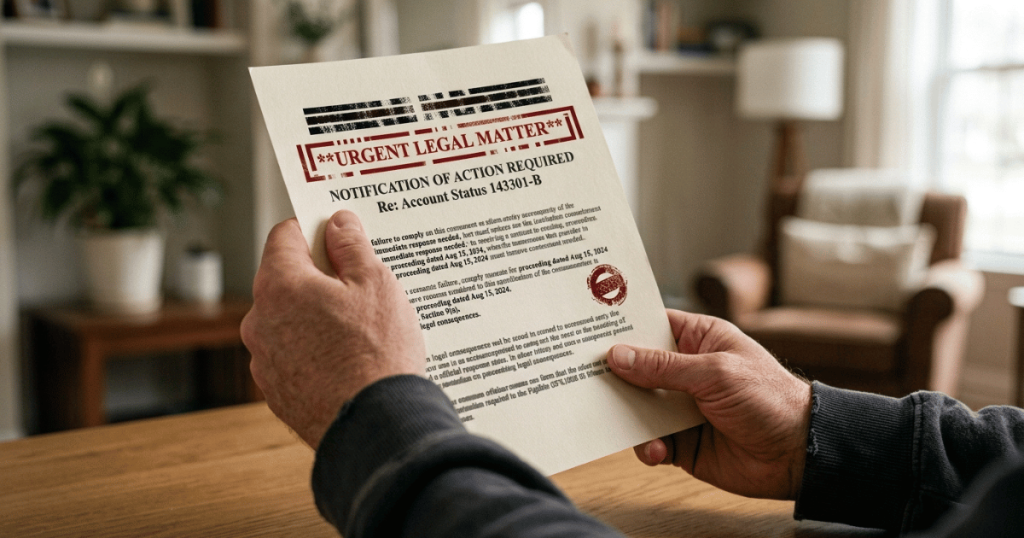
A paid reverse address lookup on a PO Box does not query USPS. It searches aggregated public records and commercial address data to see whether that box number appears somewhere else, and for a box rented by a business it frequently does. For a box rented by a private individual it frequently does not, because there is no lawful public record connecting the two. What you are buying is a faster version of a search you can run yourself, not access to a restricted registry, and the free government sources are better at the specific question most people are actually asking.
Every result on the first page of search for this term is a company selling the service. That is worth saying out loud before anything else on this page, because it means the available information about whether it works is written by the people charging for it.

What these services are actually searching
Reverse-lookup and people-search platforms build their databases from records that are already public or already commercially traded: state business registrations, court filings, property records, licensing records, voter and utility-derived address histories, marketing data, and directories. None of it comes from USPS box applications, which are not disclosed to the public.
That matters because of how the data is structured. Address-history databases are built around people living at deliverable street addresses. A PO Box is not a residence and has no occupant record in the same sense. It enters these databases only sideways: because a business filed it on a form, because it appeared on a court document, or because someone once supplied it to a company that sells its data.
So the question “will a reverse lookup resolve this box” is really the question “did this box ever get written down somewhere public.” If the answer is no, no amount of money changes it.
What you can realistically expect back
| What is asked | Realistic outcome |
|---|---|
| A PO Box used by a registered business | Often resolves to a company name, sometimes with a street address. The same record is usually free elsewhere |
| A PO Box that appears in court filings | Often resolves. Also free on the docket |
| A large organization’s high-volume box | Frequently already published by the organization itself, so a paid report adds nothing |
| A PO Box rented by a private individual | Usually does not resolve. This is the normal outcome, not a service failure |
| A brand-new box | Unlikely to resolve. Aggregated records lag by months to years |
| “Who has been mailing me from this box” | No service answers this. Nobody outside USPS holds mail records |
Two honest limits sit behind that table. Aggregated data is stale by design, because it is assembled from records that were filed at some past date and are not re-verified when circumstances change; a company can move, dissolve or hand the box on without the database noticing. And a report can be confidently wrong, matching your box to a similarly numbered box in a different city, or to an entity that shared the address years ago.
This site does not publish prices for these services and does not recommend one. Pricing changes constantly, the results are not comparable between providers, and we have no basis on which to rank them.
The legal point nobody selling this mentions
Most people-search platforms state that they are not consumer reporting agencies under the Fair Credit Reporting Act, and that their reports may not be used for employment screening, tenant screening, insurance or credit decisions. Read that as what it is: a report you buy from one of these services is not a permitted basis for a decision about someone.
The Federal Trade Commission has been explicit that the disclaimer does not settle the question. In its business guidance, the FTC notes that saying you are not a consumer reporting agency is not enough: if a company meets the legal definition, it is one, disclaimer or not. That is a warning aimed at the industry, and the consequence for you as a buyer is simple. These reports sit in an unsettled legal category, and using one to make a decision about a person can put you on the wrong side of the FCRA.
For identifying a company that sent you a letter, none of this applies, which is another reason the business question is the one worth pursuing.
The free sources that answer the question better
For a business sender, the paid route is usually the slow route. In order:
- Targeted search. Exact-phrase queries pairing the box number with a purpose word find the company’s own published address, which is a first-party confirmation rather than a third party’s summary. The full set of query patterns is in search queries that actually identify a PO Box sender.
- State business registries. Free in every state, and a government record. See finding a sender through state business registries.
- Court dockets. Free to search in many states, and cheap federally.
- The organization’s own site. Large payers, insurers and administrators publish their mailing addresses because they need your mail to arrive.
The complete order of operations across free and paid methods is in how to find out who owns a PO Box.
When paying is defensible, and when it is not
Defensible: you have run the free searches, you have a genuine business-identification question, your time has a real cost, and you understand you are buying speed rather than access.
Not defensible: you expect a guaranteed name. No service can guarantee one, because the underlying record may not exist. Treat any guarantee as a claim about marketing rather than about data.
And whatever comes back, treat a paid report the same way you would treat a forum post: as a lead that still needs confirmation from a first-party or government source before you act on it. That standard is not a formality here, it is the rule this site publishes for itself in our Editorial Policy.
This is where the line has to be drawn hardest
Search this topic and most of what you find is written for people trying to locate someone. That framing is the industry’s, and it is not this site’s.
Everything above is for one situation: an organization mailed you first and you cannot identify it. These services are not for finding an individual who has not contacted you. If you are trying to get a person’s home address, trace someone who moved away from you, or reach someone who has chosen not to be reachable, do not use this page and do not commission that search. In the United States, using lookup services or public records to find or approach a person who does not wish to be contacted can be harassment or stalking, and that is a criminal matter in every state, not a gray area or a matter of intent.
USPS itself will not release a private boxholder’s information to the public, and it will not release it at all where the customer has filed a protective court order. Those rules exist because the postal system has been used to find people who were hiding for good reason. A commercial service is not an exception to the reasoning behind them. What USPS will and will not disclose is set out in what USPS will and will not tell you about a PO Box holder.
If mail is arriving that you want stopped, the right channel is the US Postal Inspection Service, not a lookup.
Our position on these services
BloggingShout carries no affiliate links to reverse-lookup or people-search services, and earns nothing from anyone clicking through to one. Our live affiliate disclosure states the site does not currently earn commissions from affiliate links, and this page is written on that basis. If that ever changes, the disclosure page is updated first and affected articles carry an inline disclosure. That is the only reason we are able to write “the free sources are better” on a page where every competitor is paid.
Jurisdiction
This describes the United States market: US public records, USPS policy and the Fair Credit Reporting Act. Data-broker and people-search rules differ sharply elsewhere, and in the UK, the EU and several other jurisdictions this kind of search is constrained by data-protection law in ways it is not in the US.
FAQ
Does a reverse PO Box lookup use USPS records?
No. USPS does not release boxholder information to the public or to commercial services. Paid lookups search aggregated public and commercial records instead.
Can a paid service always tell me who owns a PO Box?
No. If the box was never recorded in a public or commercial record, no service can produce a name. A guarantee of results is a marketing claim, not a data claim.
Are free reverse PO Box lookups worth trying?
Free versions typically return the post office location or ZIP code rather than an owner. A targeted exact-phrase search of the box number is more useful and costs the same nothing.
Can I use a paid report to screen a tenant or an employee?
No. These services generally state they are not consumer reporting agencies and that their reports may not be used for employment, tenant, insurance or credit decisions. The FTC has warned that such disclaimers do not settle the company’s legal status either way.
What should I do if nothing identifies the box?
Accept it as a result. Some boxes never resolve, and the useful question then becomes how to handle mail from an unverified sender, covered in when a PO Box cannot be identified.
Sources: FTC business guidance on background screening reports and the FCRA · 39 CFR 265.14, Rules concerning specific categories of records · US Postal Inspection Service
Last verified at the time of writing, with a 6-month review interval. No affiliate links appear on this page; see our affiliate disclosure and Disclaimer. Nothing here is legal advice.