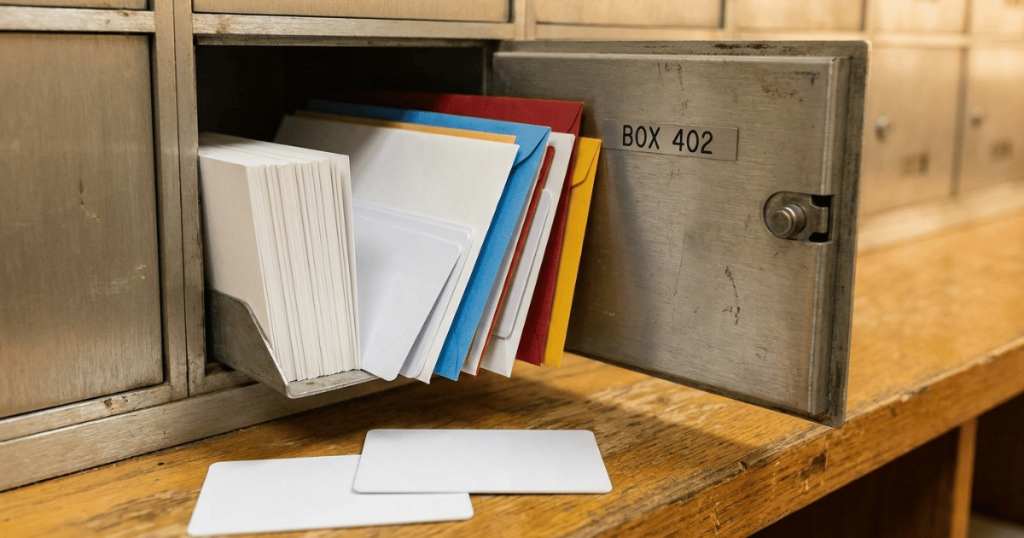
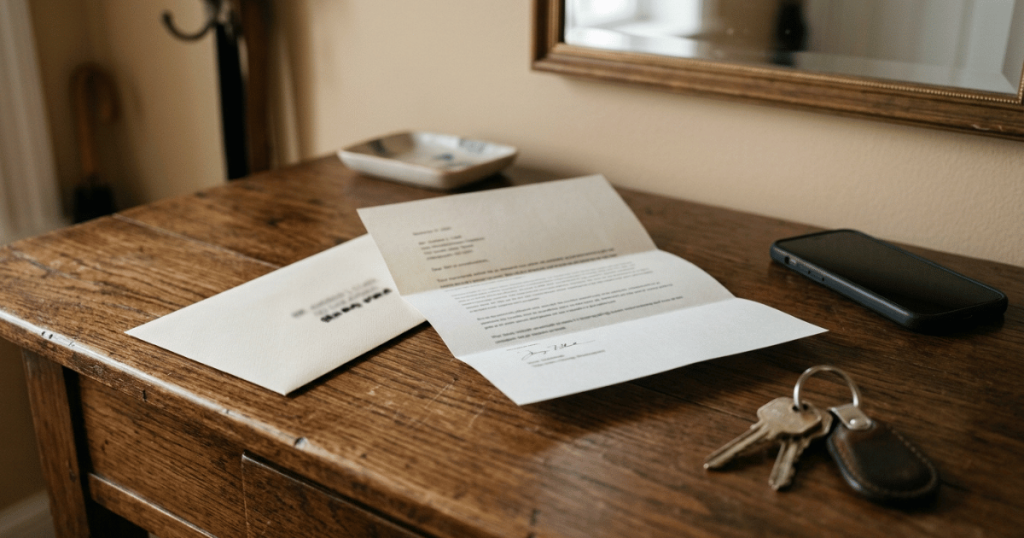
Certified Mail is a United States Postal Service add on that gives the sender proof of mailing and a delivery record, and it requires a signature. Most certified mail is sent by organizations that need to prove they contacted you: courts, tax agencies, attorneys, insurers, landlords and collectors. It is used because the sender wants a record, not because the contents are guaranteed genuine. You can identify the sender before signing, and refusing delivery is a real option with real limits.
Search this and the results are a certified mail vendor’s blog, a couple of microsites, forum threads, and a Wikipedia article about an unrelated European email standard. Nobody sets out the two things people actually want to know: how to find out who sent it before signing, and what happens if you refuse.
What Certified Mail actually is
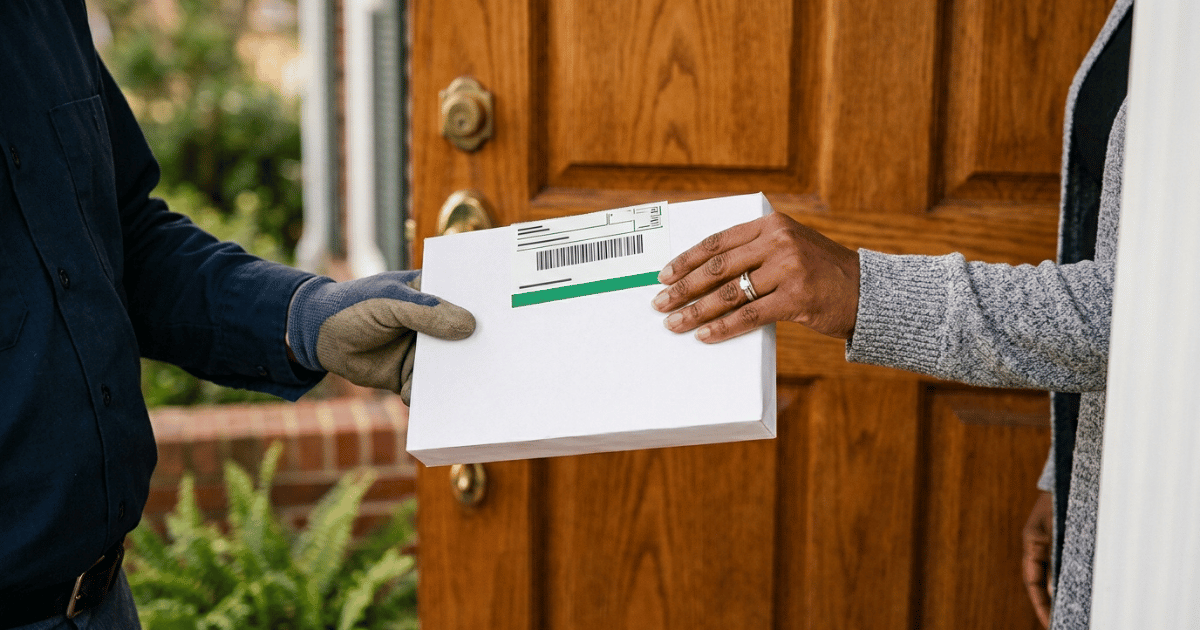
Certified Mail is a service the sender buys from USPS on top of postage. It produces a mailing receipt and an electronic delivery record, and delivery requires someone at the address to sign. If nobody signs, the carrier leaves a notice and the item is held at the local Post Office for a limited period before it is returned to the sender.
Two things follow. Buying the service is open to anyone with the postage, so the label proves the sender wanted a record, not that the sender is who the envelope says. And because the sender is paying for proof, certified mail correlates strongly with deadlines: notices, demands, court filings and statutory letters. That correlation is the useful part of the signal.
Who sends it, in practice
The common senders in the United States are courts and process servers; the Internal Revenue Service and state tax agencies; attorneys and law firms; insurers issuing cancellation or non renewal notices; landlords and homeowners associations serving notices; debt collectors; and employers or benefit administrators sending time sensitive documents.
Scam use exists too, and it works precisely because the format signals officialdom. The Consumer Financial Protection Bureau names the pattern to watch: a letter asking you to send money or personal information now in order to receive something of value later. The delivery method does not change that test.
How to identify the sender before you sign
This is the part nothing on the first page of results explains, and there are four ways in.
- The delivery notice. The slip left when nobody signs has a field for the sender. It is often completed only partly or illegibly, but check it first.
- The tracking number. Every certified item carries one. Entering it at USPS Tracking shows status and the origin facility. It does not name the sender, but the origin city is a lead.
- Informed Delivery. USPS offers a free service that emails scanned images of the outside of incoming letter mail. If you are enrolled, the envelope image often shows the return address before the item reaches you.
- The Post Office counter. When an item is being held for you, staff can generally tell you the sender shown on the label when you present the notice and identification.
Once you have a name, confirming it is a lookup rather than a guess: the organization’s own published address, a state business registry, or a court docket. The order that works is in how to find out who owns a PO Box, and reading the address itself is covered in how to read a business return address.
What refusing delivery does, and what it does not do
You may refuse certified mail. The carrier records the refusal and the item returns to the sender. That is the whole of what refusal accomplishes at the postal level.
What it does not do is undo the sender’s position. Agencies and courts in the United States commonly treat correctly addressed mail as effective whether or not the recipient signs, and a refused notice is generally documented as a delivery attempt rather than as a failure to notify. Refusing an IRS notice does not cancel it. Refusing a court related mailing does not stop a case. Refusal also destroys the one thing you would want if the letter turns out to be fraudulent, which is the document itself.
This is a general description of how the system is designed to work and it is not legal advice. If the item relates to a court case, a tax matter or a debt, the sensible move is to accept it, read it, and then verify the sender independently before doing anything it asks. Where the letter concerns a debt you do not recognize, enter through the sender’s identity rather than the balance, as set out in a letter about a debt you do not recognize.
Signing is not agreeing
A frequent worry is that signing accepts liability for whatever is inside. It does not. The signature records that an item was delivered to that address on that date. It is an acknowledgment of receipt, not of the contents, not of a debt, and not of any claim in the letter. The green Return Receipt card, when the sender pays for one, does the same job and mails the record back to the sender.
If the letter turns out to be fraudulent
Keep everything: the envelope, the label, the contents and the notice slip. Mail fraud in the United States is investigated by the United States Postal Inspection Service, which takes reports at uspis.gov, and consumer reports go to the Federal Trade Commission at reportfraud.ftc.gov. Do not respond to the letter to test it, and do not call a number printed in it. Reach the named organization through contact details you find yourself.
This site does not tell readers that a specific piece of mail is safe or fraudulent, because the person holding it has information no article can see. What we can do is name what to check and where to report. The broader decision path is in what to do with a letter from an unknown sender.
FAQ
Can I find out who sent certified mail before I sign for it?
Often yes. Check the sender field on the notice slip, run the tracking number for the origin facility, check Informed Delivery for an envelope image, or ask at the Post Office holding the item.
Does refusing certified mail make the problem go away?
No. It returns the item to the sender and is typically recorded as an attempted delivery. Agencies and courts generally treat properly addressed mail as effective regardless of refusal.
Does signing for certified mail mean I accept what it says?
No. The signature records delivery of an item on a date. It is not agreement with the contents or acknowledgment of any claim.
Do scammers use certified mail?
It happens, because the format signals officialdom. The service is available to anyone who pays for it, so treat the delivery method as neutral and apply the usual checks to the contents.
How long does the Post Office hold certified mail?
It is held for a limited period after the notice is left, then returned to the sender. Check the notice slip, which states the final date for that item.
Last verified: 6 August 2026. Reviewed every 12 months, or sooner if USPS service terms change.
Sources: USPS Certified Mail · Consumer Financial Protection Bureau: recognizing mail fraud · United States Postal Inspection Service reporting · Federal Trade Commission fraud reporting · This site’s Editorial Policy and Disclaimer explain how identifications here are sourced and why we do not rule on individual letters.