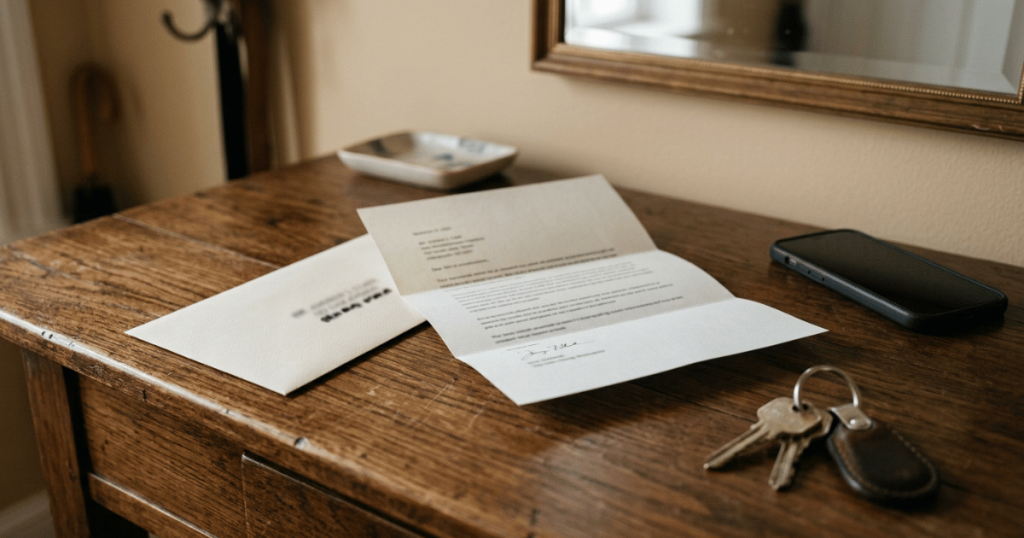
“Dept” followed by a number is a department or routing code, not a separate company, a person, or a case number. Large organizations, insurers, collectors, and billing services in particular, use one PO Box for a huge volume of incoming mail and add a Dept number so mail gets sorted to the right internal team once it arrives. A single box can carry several different Dept numbers over time, each pointing at a different unit of the same organization, without the box itself changing hands.
Why one company puts several Dept numbers on one box
Renting a separate PO Box for every internal department would be expensive and would not actually help mail move faster once it is inside the building. Instead, one physical box collects everything, and the Dept number printed on the outgoing (and often the return) address tells the organization’s own internal mail room which desk should open it. From the reader’s side, that means seeing “Dept 688” on one letter and “Dept 922” from the same box number on a different letter is not two different senders. It is one sender running two internal workflows through the same box.

What it does not tell you
A Dept number does not identify the company. It is an internal reference that only makes sense to the organization that assigned it, so treating “Dept 688” as if it were the sender’s name is a common misread. The box number is the entity to identify; the Dept number is metadata layered on top of it.
Which kinds of senders use Dept numbers most
Dept numbers show up disproportionately in a handful of industries, and recognizing the pattern helps set expectations before you search. Health insurers and healthcare payers route claims, billing, and member-services mail through a shared box with different Dept numbers for each function. Debt collectors and benefit administrators do the same when one agency manages multiple accounts or clients out of a single mailing address. Card issuers and lenders separate payments, disputes, and general correspondence the same way. None of this is unique to any one company; it is simply how high-volume mailers manage a fixed piece of physical mail infrastructure (a rented box) against a much larger number of internal workflows.
Why the pattern is easy to misread as suspicious
A letter that says “Dept 47” on one visit and “Dept 213” on the next, from the same box number, can look inconsistent enough to raise doubt about whether the mail is legitimate at all. In isolation, that is a reasonable reaction. In practice, changing Dept numbers over time is closer to a company reorganizing its internal mail sorting than to a sign of anything being wrong with the mail itself. The box number staying constant while the Dept number changes is itself informative: it means the same organization still holds the box, and only the internal routing changed.
How to search past the Dept number
When identifying the sender behind an address like “Dept 688, PO Box [number],” drop the Dept number from the search entirely and search on the box number and city instead, alongside a second term such as “claims” or “collections.” Adding “Dept” or the department number to the query usually returns nothing, because that string is internal to the company and rarely appears anywhere public. The full method, including state registry and court-record checks, is covered in how to find out who owns a PO Box.
One real example: the box behind /dept-688-po-box-4115/ on this site carries at least two Dept numbers tied to the same underlying company, which is the exact pattern described above, a routing suffix on one box rather than two different senders.
Presort marks and other envelope codes
A Dept number is one of several things printed on high-volume commercial mail that look cryptic but have a plain explanation. Presort marks, barcodes, and permit numbers near the postage indicia are postal processing codes, not sender information, and reading them correctly is part of reading the envelope before deciding what to do with it. That is covered in more depth once this cluster’s presort-marks page is published; for now, the short version is that none of those marks identify who mailed the letter, only how USPS routed it.
What to do once you’ve identified the sender
Knowing the company behind a box does not automatically tell you whether a specific letter is something to act on. Reading the Dept number correctly is one step in a larger decision process: identify the sender, verify the sender independently, then decide whether to respond, ignore, or report. That full decision path, including what to do when the letter itself creates urgency, is covered in what to do about a letter from an unknown sender.
Reading the whole address before you decide anything
A Dept number is one line of several on a return address, and it is worth reading in context with the rest: the box number, the ZIP+4 (which can encode a specific department or facility on its own), and any presort or barcode marks near the postage. Taken together, these elements describe how a piece of mail moved through a large organization’s system, not whether the mail itself is trustworthy. That second question, whether to trust and how to act on a specific letter, is a separate decision covered in what to do about a letter from an unknown sender, and it should not be answered by the Dept number alone in either direction.
FAQ
Is a Dept number the same as a suite or apartment number?
No. A suite or apartment number identifies a physical location within a building. A Dept number on a PO Box address is an internal routing code used by the organization that rents the box, and it has no bearing on the physical location of the box itself.
Can two different Dept numbers on the same box mean two different companies?
Not usually. The far more common pattern is one company running several internal departments (billing, claims, collections) through a single rented box, with the Dept number distinguishing which department the mail is meant for once it is opened internally.
Should I include the Dept number when I write back?
If the original letter listed one, including it on a reply generally helps the item reach the right desk faster. Dropping it does not usually cause the mail to be lost, since the box number alone still routes it to the same organization.
Does the Dept number appear in USPS records?
No. USPS tracks the box itself, not what an organization internally calls its own departments. A Boxholder Information Request, described in how to find out who owns a PO Box, resolves against the box, not the Dept number printed on the envelope.
Why did the Dept number on my mail change from a previous letter?
Organizations reorganize which internal team handles which type of correspondence, and the Dept number on outgoing mail changes to reflect that. On its own, a changed Dept number from the same box and the same company name is an internal reshuffle, not evidence that the mail is now coming from somewhere else.
Sources: This site’s Editorial Policy states that sender identifications here are published only when they trace to a verifiable source. Where a Dept number cannot be tied to a confirmed company, this site says so rather than guessing, per the Disclaimer.