Federal law addresses this directly. A mailed solicitation that gives the appearance of being from a government agency must carry a conspicuous disclaimer saying it is not, and mail that falsely implies federal government connection is subject to USPS enforcement. So the fastest check on an official looking letter is not the eagle or the case number. It is whether a disclaimer is printed somewhere on the piece, usually in small type at the bottom or on the reverse.
The head of this topic belongs to the agencies themselves, and correctly so. What follows is the part they cover least: what the envelope has to tell you by law, and the specific named patterns that keep recurring.

What the law requires the sender to print
Under federal law governing nonmailable matter, a solicitation that reasonably could be interpreted as coming from the United States government must bear a clear and conspicuous disclaimer that it is not a government document and has no government approval. USPS treats mailings that violate this as an enforcement matter and publishes guidance on the category, which it calls government look-alike mail.
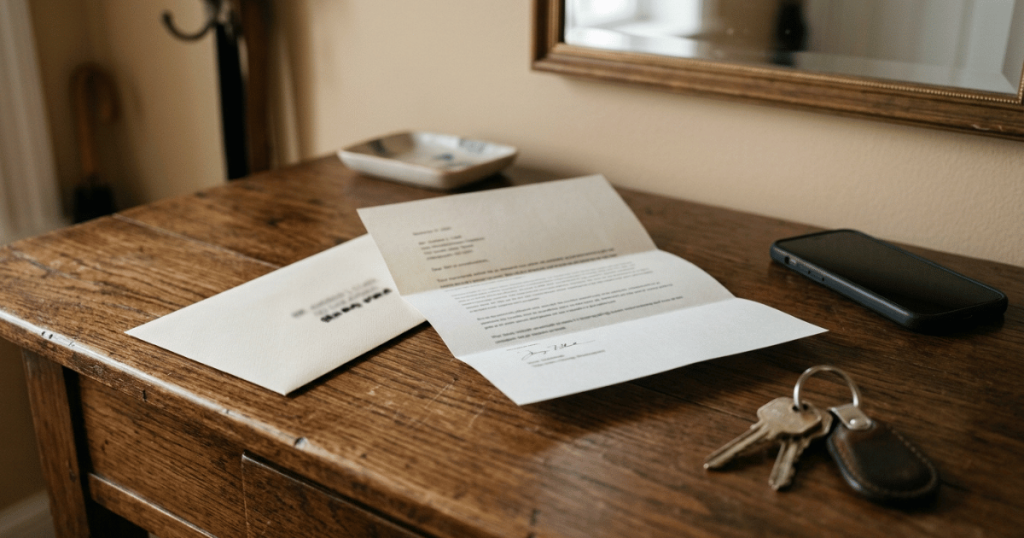
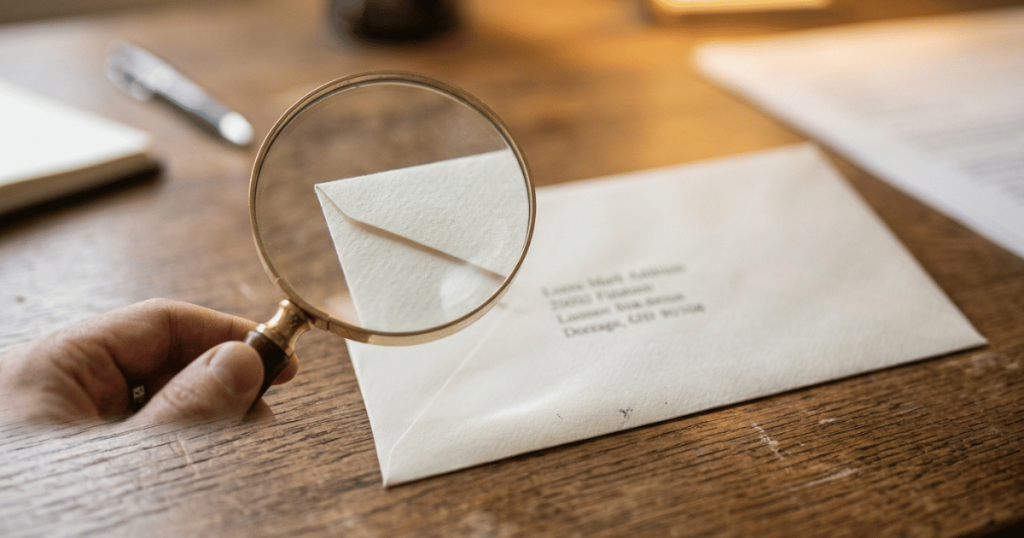
This gives you a check that requires no knowledge of the sender. Turn the letter over and read the smallest type on it. A commercial solicitation dressed as officialdom will usually carry that disclaimer, because printing it is what keeps the mailing lawful. Finding it settles the question immediately. Not finding it does not confirm the opposite, since an outright impersonation simply breaks the rule.
The design cues, and why they work
The recurring devices are consistent: a brown or manila envelope, eagles, shields and seal like graphics, a case, file or notice number, wording such as final notice or immediate response required, penalty warnings for non-response, a window envelope styled like a tax document, and an official sounding department name that turns out to belong to no agency.
That last one is the strongest tell available. Agency names are checkable in seconds. A real federal agency appears on usa.gov and has a .gov website. A body calling itself something like a records management department or a business regulations department, with no .gov presence, is not a government office regardless of how the letterhead looks.
The named patterns that keep recurring
Three come up repeatedly in United States consumer alerts.
Vehicle service contract mail. Letters from an official sounding vehicle or warranty division warning that coverage is expiring. These are marketing for extended service contracts, not notices from any motor vehicle agency.
Business compliance notices. Letters to business owners demanding a fee for a certificate, filing or labor law poster, framed as a federal or state requirement. The Federal Trade Commission has published on government impersonators mailing fake notices to business owners.
Benefits agency impersonation. Letters using Social Security Administration or inspector general letterhead, real employee names and official jargon to prompt a call. The SSA Office of the Inspector General maintains scam alerts on exactly this and states plainly that the agency does not request personal information this way.
How agencies actually correspond
Four habits differ from the imitations. Real agencies write to you about a matter you can already identify, referencing an account, a filing or a case that exists in your own records. They use their own .gov domain, and their published phone numbers can be found independently rather than only inside the letter. They do not collect payment by gift card, wire transfer or cryptocurrency. And they give response windows measured in weeks, set by regulation, rather than in hours.
None of these is absolute on its own. Taken together they separate the categories reliably, and each can be checked without contacting the sender.
Checking without touching the letter’s contact details
Look up the named agency or department on usa.gov or your state’s own portal. If the name does not exist there, that is the answer. If it does exist, reach it through the number published on its own site, never the number in the letter, and ask whether the correspondence is theirs.
Then look at the envelope itself. A federal agency’s return address will be a government address, not a commercial box in an unrelated state, and reading the address apart from the branding is covered in how to read a business return address. If the return address is a box you cannot place, the method for resolving it is in how to find out who owns a PO Box. Note that a box alone proves nothing either way, since agencies do use centralized addresses, for the ordinary reasons set out in why a company mails you from a state you have no connection to.
Related shapes worth naming
Two overlap heavily with this one. A prize or sweepstakes mailing styled as a government document is restricted by a separate statute, covered in sweepstakes and prize letters. And a letter carrying a very short deadline is a distinct pressure pattern that has real and manufactured versions, covered in deadline and urgency language on a letter.
We do not rule on individual letters here, because the person holding one can see the whole piece and we cannot. What we can give you is the disclaimer check, the agency name check, and the reporting route. Mail that impersonates a federal agency can be reported to the United States Postal Inspection Service and to reportfraud.ftc.gov. The general decision path is in what to do with a letter from an unknown sender.
FAQ
Is it illegal to send mail that looks like it is from the government?
Federal law requires solicitations that appear to be from the government to carry a conspicuous disclaimer saying they are not, and mail falsely implying federal connection is subject to USPS enforcement.
Where is the disclaimer printed?
Usually in small type at the bottom of the letter or on the reverse of the mailing. Read the smallest type on the piece before anything else.
How do I check whether a department name is real?
Look it up on usa.gov or your state portal. Real federal agencies have .gov websites. An official sounding name with no .gov presence is not a government office.
Does a PO Box return address mean it is fake?
No. Agencies use centralized addresses too. The box tells you where to look, not whether the sender is genuine.
Who do I report it to?
The United States Postal Inspection Service for mail based impersonation, and the Federal Trade Commission at reportfraud.ftc.gov. Report SSA impersonation to the SSA Office of the Inspector General.
Last verified: 18 August 2026. Reviewed every 12 months, or sooner if USPS guidance changes.
Sources: United States Postal Inspection Service: government look-alike mail · USPS Publication 300-A · FTC: government impersonators mail fake notices to business owners · SSA Office of the Inspector General scam awareness · This site’s Editorial Policy and Disclaimer explain how identifications here are sourced and why we do not rule on individual letters.