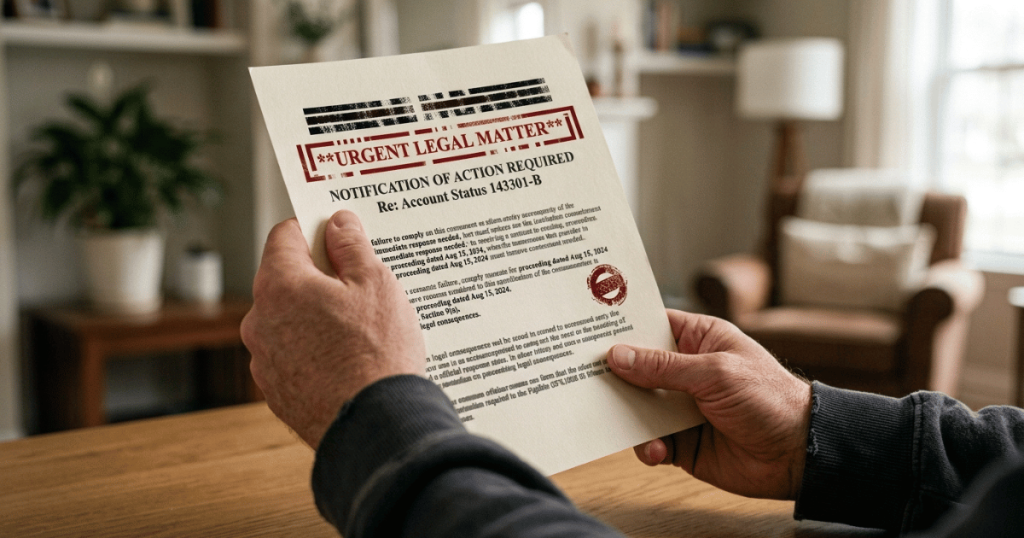
Three very different things arrive looking similar. A demand letter from a law firm is correspondence, not a lawsuit. A letter from a company’s internal legal department is written by employees who may not be attorneys at all. Actual court proceedings arrive as service of process, with a court’s own caption and case number, and are verifiable on that court’s public docket. Establishing which of the three you are holding comes before deciding anything, and all three checks are free.
The useful pages on this topic are written for publishers and businesses facing defamation or intellectual property threats. If you are an individual who just opened an intimidating envelope from a PO Box, start here.

The three categories
A demand or cease and desist letter. Sent by an attorney or a firm on a client’s behalf. It states a claim and asks you to do something. It has no independent legal force by itself, though ignoring a genuine one can carry consequences later. It is the opening of a conversation, not a judgment.
A letter from a legal department or pre-legal division. Common in collections. The wording implies lawyers and imminent filing. Frequently no attorney is involved and no filing is planned. Note that under federal law a debt collector may not falsely represent that legal action will be taken when it will not be, or falsely imply that a communication comes from an attorney.
Actual service of process. A summons and complaint, carrying the court’s name, a case or docket number, and specific response deadlines. This is the only one of the three that starts a clock a court will enforce, and it is also the one you can verify most definitively.
The check that resolves most of it: is there a real case
If the letter references a case number and a court, look that case up on the court’s own public record. Many state courts publish free online case searches, county clerks maintain dockets, and federal cases appear on PACER. A case that exists will be findable. A case number that returns nothing, in a court that has no record of it, is telling you something specific.
Do this before responding to anything, and reach the court through its own published address rather than through any link or number in the letter.
The second check: is the attorney real
Every United States state bar publishes a free public attorney lookup showing whether a named lawyer is licensed in that state and in good standing. It takes about a minute.
Two results matter. A named attorney who does not appear in the bar of the state where the letter claims they practice is a significant finding. And a letter that implies legal action but names no attorney at all, only a department, is telling you by omission which of the three categories it belongs to.
The third check: who actually mailed it
Law firms and collection agencies both mail from PO Boxes, so the box itself proves nothing. What it can do is confirm or fail to confirm the named entity. Resolve the box against the firm’s own published address, a state business registry, or a court filing, using the order in how to find out who owns a PO Box, and read the address lines apart from the letterhead as in how to read a business return address. If the letter came certified, that is a signal the sender wanted a delivery record and nothing more, as explained in certified mail you weren’t expecting.
When the threat concerns a debt
This is the most common version, and it has a specific entry point. Work from the sender’s identity outward rather than arguing about the balance, since the question of who is writing to you is answerable and the question of what you owe often is not, at least not yet. The Consumer Financial Protection Bureau sets out what debt collectors may and may not do, including the rules on validation and on misrepresenting legal action. The route through the envelope is in a letter about a debt you do not recognize.
What not to do, and what this page is not
Do not ignore it if any part of it is verifiable. A real demand letter that is ignored can become a real filing, and a real summons that is ignored can become a default judgment, which is the worst available outcome and the hardest to undo.
Do not respond emotionally, do not admit or deny anything in writing before you understand what you are holding, and do not call a number printed in the letter to argue. Do not pay by gift card, wire transfer or cryptocurrency under any circumstances, because no genuine legal process collects that way.
This is not legal advice, and this site does not tell readers whether a specific letter is genuine or what their position is. If anything checks out, or if you are unsure after the three checks above, that is the point to speak to a lawyer. Legal aid organizations and state bar referral services exist in every state, and many offer free or reduced cost consultations for exactly this situation. If the letter fails all three checks and demands payment, the Federal Trade Commission and the United States Postal Inspection Service take reports. The general decision path is in what to do with a letter from an unknown sender.
FAQ
Is a letter threatening to sue the same as being sued?
No. A demand letter is correspondence. Being sued arrives as service of process with a court caption, a case number and enforceable deadlines.
How do I check whether a lawsuit against me is real?
Search the named court’s own public case records for the case number. Free searches exist for many state courts and county clerks, and federal cases appear on PACER.
How do I know the attorney is real?
Use the free public attorney lookup published by the state bar where they claim to practice. It shows licensing and standing.
Can a debt collector say they will sue me?
Federal law prohibits a collector from falsely representing that legal action will be taken when it will not be, or falsely implying a communication is from an attorney. The CFPB documents these rules.
Should I just ignore it?
Not if any part of it checks out. Ignoring a genuine summons can result in a default judgment. Verify first, then decide, and take advice if anything is confirmed.
Last verified: 19 August 2026. Reviewed every 12 months.
Sources: Consumer Financial Protection Bureau: debt collection · Federal Trade Commission fraud reporting · United States Postal Inspection Service reporting · This site’s Editorial Policy and Disclaimer explain how identifications here are sourced. Nothing here is legal advice.