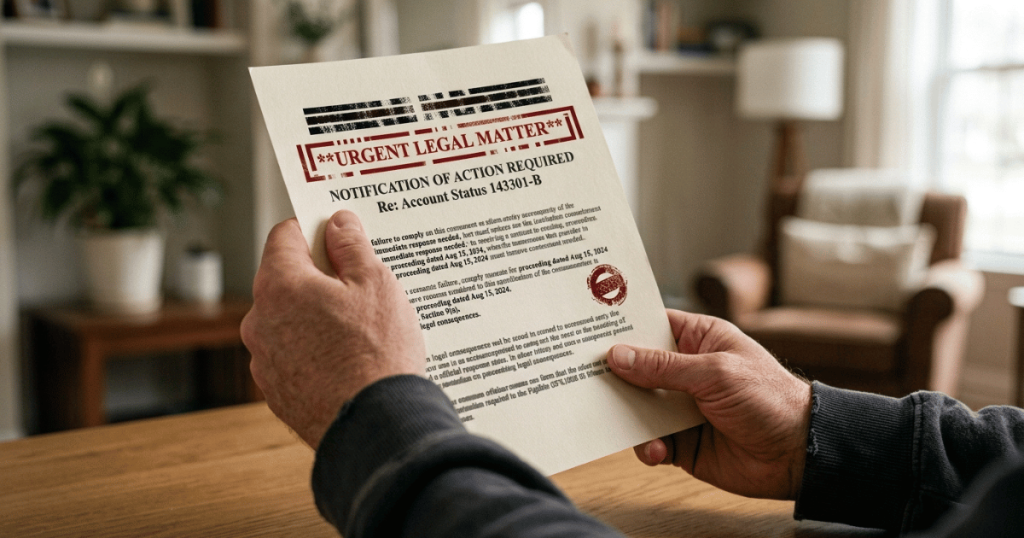
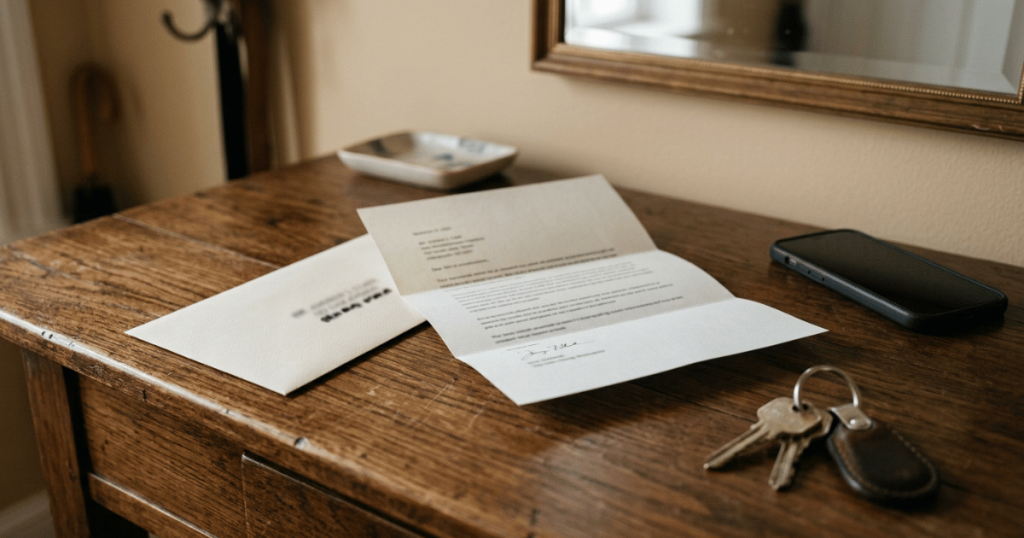
Searching the box number on its own almost never works, because those results are dominated by lookup services that auto-generate a page for every box number in the country. What works is pairing the box number, in quotation marks, with a word describing why an organization would rent a box: "PO Box 14099" claims, "PO Box 14099" remittance, "PO Box 14099" collections. Businesses publish their own PO Boxes, in plan documents, remittance instructions and legal notices, because they need your payment or your form to arrive. You are not hunting a hidden record. You are looking for the page where the company published its own address.
That reframe is the whole method. Below are the query patterns that surface those pages, in the order worth trying them.
Why the box number alone gives you nothing
Type a bare box number into any search engine and you get a wall of near-identical pages offering to run a reverse lookup. That is not a coincidence and it is not the search engine failing. People-search sites generate pages programmatically against number patterns, so a page technically “about” your box exists whether or not anyone has ever identified it. The result looks like a hit and contains no information.
The fix is to add a second term that only a real document would contain. Every query below does that.
The query cookbook
Put the box number in quotation marks every time. Exact-phrase quoting is the one search operator that has stayed reliable, and without it the engine will happily match a different number.
| Query pattern | What it surfaces | Try it when |
|---|---|---|
"PO Box 12345" claims |
Insurer claim addresses, plan documents, benefit booklets | The letter mentions a claim, a policy, a plan or a member ID |
"PO Box 12345" settlement |
Class action notice sites and administrator pages | The letter mentions a case, a settlement or a claim deadline |
"PO Box 12345" collections or "PO Box 12345" attorney |
Debt buyers and collection firms that publish their mailing address | The letter is about money you supposedly owe |
"PO Box 12345" remittance or "PO Box 12345" "make checks payable" |
Invoices, payment instructions, vendor onboarding pages | The letter asks for a payment |
"PO Box 12345" "customer service" or "member services" |
Corporate contact pages | The letter is a notice or statement from a large organization |
"PO Box 12345" "City, ST" |
Anything that publishes the full address block | Always. The city and state narrow it hard |
"Box 12345" "City, ST" without the PO prefix |
Documents that write it as “Box 12345” or “P.O. Box 12345” | The first pass came back thin |
"PO Box 12345" filetype:pdf |
Provider manuals, benefit summaries, court exhibits, government filings | The company is a healthcare payer, insurer or contractor |
"12345-6789" (the full ZIP+4) |
Documents carrying the exact ZIP+4 rather than the box line | You have a ZIP+4 on the envelope and the box search failed |
"PO Box 12345" site:.gov |
Regulator filings, state agency vendor lists, court notices | The sender may be regulated or contracted |
Two habits make all of these work better. Search the box number with and without punctuation, because “P.O. Box”, “PO Box” and “Box” are all in circulation. And search the number alone inside quotes with the state abbreviation appended, since many documents print the address on one line.
What is on the envelope that you are not searching yet
Most people search one thing off the letter and stop. The envelope usually carries three more searchable strings:
- The ZIP+4. The extra four digits are frequently unique to a single high-volume recipient, which makes the full nine-digit code a sharper query than the box number.
- The Dept number. A “Dept 688” line above the box is an internal routing code, not a separate entity, so drop it from registry searches but keep it in web searches: it appears in remittance instructions verbatim. What it means is in what “Dept” means on a PO Box address.
- The permit number and the entry city from the postage block near the stamp. The entry city tells you where the mailing physically originated, which is often nowhere near the return address.
Reading the whole address block before searching is the single biggest time saver here, and it is set out line by line in how to read a business return address.
Grading what you find
Not every hit is worth the same, and this is where most searches go wrong. Rank the result before you believe it.
| What you found | Strength | How to treat it |
|---|---|---|
| The organization’s own website, PDF or notice listing that box | Confirmation | Strong. This is first-party. Note the URL and the date |
| A government record: state registry filing, court exhibit, regulator document | Confirmation | Strong. A government record, not a summary of one |
| A third-party directory or aggregator page naming a company | Lead | Verify against a first-party or government source before believing it |
| A forum post or complaint board naming a company | Lead, at best | Often right, often years out of date, never a source on its own |
| A reverse-lookup landing page that lists your box | Nothing | Auto-generated. It is not an identification |
The rule this site follows is that an identification needs a named, checkable source, and where a sender cannot be verified we say so rather than guessing. That standard is written down in our Editorial Policy.
When search alone is not enough
If the queries come back empty, two free record systems are the next stop, in this order:
- The state business registry for the state the box’s ZIP code sits in, once you have any candidate name. Registries are name-first, not address-first, which is why they come after searching. See finding a sender through state business registries.
- Court dockets, if the letter references a case, a claim number or a settlement. See finding a sender through court and settlement records.
If all three come back empty, that is a real answer rather than a failed attempt, and the next question changes from “who is this” to “what do I do with mail I cannot verify.” That path is when a PO Box cannot be identified. The complete order of operations across every method sits in how to find out who owns a PO Box.
This finds companies, not people
Every query above is built on one fact: businesses publish their own PO Boxes because they want mail to arrive. That is why this works, and it is also why it works only for businesses.
None of this is a way to find an individual. If you are trying to locate a person’s home address, trace someone who has moved away from you, or reach someone who has chosen not to be reachable, these queries are not for that and this site will not help with it. In the United States, using searches, records or lookup services to find or approach a person who does not wish to be contacted can be harassment or stalking, and that is a criminal matter in every state rather than a gray area. USPS itself will not release an individual boxholder’s information to the public, and the reason for that restriction is the same reason this page stops here.
Jurisdiction
These queries are written for United States mail and US public records: state business registries, US court dockets and USPS addressing conventions. The technique of searching an exact address string travels anywhere, but the record systems it relies on do not.
FAQ
Can I look up what company a PO Box belongs to for free?
Often, yes. Exact-phrase searches pairing the box number with a purpose word, plus a free state business registry check, resolve a meaningful share of company-owned boxes at no cost.
Why does searching a PO Box number return only lookup services?
Because people-search sites generate a page for essentially every box number automatically. Those pages exist without anyone having identified the box. Adding a second term to the query filters them out.
Which single query should I try first?
The box number in quotation marks plus the city and state in quotation marks. It is the highest-yield first pass because full address blocks are printed as a unit.
Is a company name I found on a forum good enough?
Treat it as a lead, not a confirmation. Forum posts are often correct and often years out of date. Verify it against the company’s own published address or a government record before acting on it.
What if nothing works?
Some boxes genuinely never resolve, and no paid service can invent a record that does not exist. At that point the useful question is how to handle mail from an unverified sender, not which keyword to try next.
Sources: USPS, PO Box basics · PACER Case Locator · US Postal Inspection Service
Last verified at the time of writing, with a 6-month review interval. Our sourcing standard is in the Editorial Policy; the limits of this information are in the Disclaimer. Nothing here is legal advice.