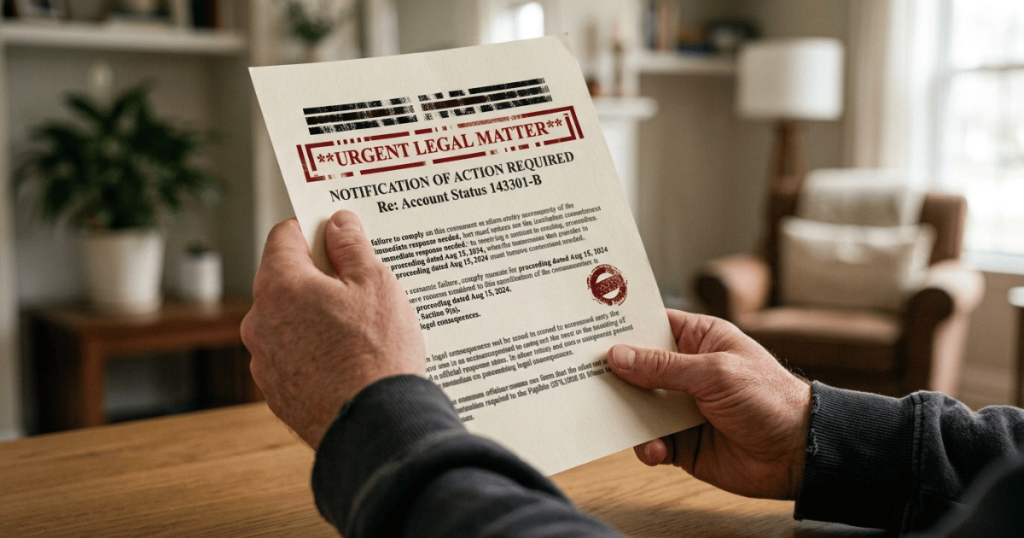
If a tax refund check looks fake, there are two separate questions to answer: does the paper carry the security features of a real U.S. Treasury check, and does the payment match a refund the IRS actually issued to you. The Treasury publishes the features it prints on every check, including a “U.S. TREASURY” watermark and a seal whose ink runs red when wet. The IRS confirms the payment side through its own refund tools and phone lines. Neither check alone settles it. This page walks through both, for federal refunds in the United States, without ruling on the check in your hand.
Last checked: September 25, 2026. This page covers United States federal tax refunds and explains how verification works. It is general information, not tax or legal advice, and it does not tell you whether any particular check is real.

Why a real refund check can look wrong in 2026
Before looking at the paper, it helps to know how unusual a paper refund has become. According to the IRS’s questions and answers on Executive Order 14247, published in the IRS newsroom and read by us on September 25, 2026, “The IRS generally stopped issuing paper refund checks for individual taxpayers after Sept. 30, 2025.”
That does not mean every paper refund is fake. The same IRS page describes two situations where paper checks still go out:
- No bank details on the return. The IRS says a taxpayer who leaves out banking information receives “a CP53E notice in the mail requesting a response within 30 days, either to provide banking information or to explain why such information cannot be provided.” If there is no response and no other issue, “the refund will be released as a paper check after six weeks.”
- Limited exceptions. The IRS says “Limited exceptions to electronic methods will be made for specific situations such as those involving hardships, and/or legal and procedural requirements.”
So a useful first question is simple: did you receive a CP53E notice, or did you file without giving bank details? If you gave direct deposit information and a paper check still arrived, that gap is worth resolving with the IRS before anything else. It is not proof of fraud, but it is exactly the kind of mismatch the IRS can explain and a stranger cannot.
Three reasons a refund check “looks wrong”
People who search this phrase usually mean one of three different things. Sorting out which one applies saves time.
| What looks wrong | What it can mean | Who can explain it |
|---|---|---|
| The amount is different from what you expected | The IRS changed your return, or someone filed a return in your name | The IRS, through a notice or its phone line |
| The name, address or tax year looks off | An old address on file, a former name, or a return you did not file | The IRS, and your own copy of the return |
| The paper, printing or colors look odd | A worn or unusual check stock, or a counterfeit | The Treasury security features below, plus your bank |
On the first row, the IRS refunds page, which we read on September 25, 2026, says: “Sometimes we make changes or corrections to your tax return which could increase your refund amount. When this happens, we’ll mail you a notice explaining the adjustment.” A different amount with a matching notice is one thing. A different amount with no notice, or a check for a year you never filed, is a question for the IRS directly.
If the check is made out to someone who used to live at your address, that is a separate situation, covered in what to do when a check made out to someone else arrives at your address.
The security features on a real U.S. Treasury check
The Bureau of the Fiscal Service publishes a one-page guide called U.S. Treasury Check Security Features, dated June 2021, which we read on September 25, 2026. It lists five features. Here is what each one is and how to look for it at home.
Watermark
The guide says: “All U.S. Treasury checks are printed on watermarked paper. The watermark reads ‘U.S. TREASURY’ and can be seen from both the front and back of the check when held up to a light.” It adds that “Any check not having the watermark should be suspected as being counterfeit or copied.” This is the easiest test, since it needs only a window or a lamp.
Treasury seal
The seal identifies the “Bureau of the Fiscal Service” or the older “Financial Management Service.” The guide notes that the older seal “will be seen in rotation until this check stock runs out.” So either name on the seal can appear on a genuine check.
Bleeding ink
According to the guide, the Treasury seal, “located to the right of the Statue of Liberty, contains security ink that will run and turn red when moisture is applied to the black ink of the seal.” A damp fingertip on the seal is the test the guide describes.
Microprinting
The guide explains that microprinted words “are so small they appear as just a line to the naked eye” but become readable under magnification. It says microprinting “cannot be duplicated by a copier and when a check is counterfeited, it will often show up as a solid line or a series of dots.” The guide says the Treasury check uses microprinting in three areas. A magnifying glass or a phone camera zoomed in on the lines is enough to look.
Ultraviolet overprinting pattern
This one needs a black light. The guide describes “a protective ultraviolet pattern, invisible to the naked eye,” made of repeated “FMS” or “FISCALSERVICE” lines, usually “under the payee information and dollar amount area.” It also notes that if the amount box “is shaved or altered in any way, a space will be created in the ultraviolet area.” Most people will not own a black light, but a bank branch may.
What the features can and cannot tell you
Passing these checks means the paper matches Treasury check stock. It does not mean the payment is yours or that the amount is right. A check can be printed on real stock and still be altered. Failing one of them, especially the watermark, is a strong reason to stop and verify before doing anything with the check.
The same Treasury guide points to one more tool: “You may verify check issue information using the Bureau of the Fiscal Service Treasury Check Verification System (TCVS).” That system checks whether a Treasury check with those details was issued. Your bank can also look at a check with you before you decide anything.
Confirming the refund itself with the IRS
The paper test tells you about the check. The IRS tells you about the refund. The goal is to confirm it through a channel you reach on your own, never through a phone number, website or letter that came with the check.
According to the IRS refunds page we read on September 25, 2026:
- The Where’s My Refund tool asks for your “Exact refund amount, Social Security number or ITIN, Filing status (married, single, etc.), Tax year.” Those details come from your own copy of the return, not from the check.
- The IRS lists 800-829-1954 for refund questions and 800-829-1040 for refund traces on joint returns.
- On timing, the IRS says “You should receive your refund check within 4 weeks from the date we issue it.”
If the amount, the tax year and the timing line up with what the IRS shows, you have an official answer. If they do not, the IRS is the place to raise it, and the same phone lines apply.
If the check turns out to be more than you are owed
A genuine check can still be a mistake. The IRS calls this an erroneous refund. Its Tax Topic 161, which we read on September 25, 2026, defines it as a refund “you’re not entitled at all or for an amount more than you’re entitled to.” For an uncashed paper check, the IRS describes writing “Void” in the endorsement section and returning it “immediately, but no later than 21 days, to the appropriate IRS location,” with the address depending on your state. The IRS page also says “Cashing an erroneous refund check may result in interest due to the IRS.” Because the right address and steps depend on your situation, the IRS page itself, or a tax professional, is the place to confirm them.
The pattern that matters more than the paper
Some refund-check schemes do not depend on how the check looks at all. The pattern goes like this: a check arrives, then someone calls, texts or writes to say the IRS “overpaid” you and asks for the difference back by wire, gift card or payment app.
The Federal Trade Commission’s page on how to spot, avoid and report fake check scams, dated June 2025 and read on September 25, 2026, explains why that request is the danger: “By law, banks have to make deposited funds available quickly. Even if you see the funds in your account, that doesn’t mean it’s a good check. Fake checks can take weeks to be discovered and untangled. By that time, the scammer has any money you sent, and you’re stuck paying the money back to the bank.” We explain the banking side of this in more detail in why a cleared check does not mean the check is good.
A request to send part of a refund back to a private person, by any method, is a reason to stop and call the IRS on a number you looked up yourself. The IRS’s own process for returning money, described above, goes to an IRS location, not to a caller.
Letters that arrive alongside a check and use seals, case numbers or official-sounding department names are a related trick. What those letters tend to look like is covered in letters designed to look like government mail.
What about state tax refund checks?
Everything above is about federal refunds, which are paid as U.S. Treasury checks. A state income tax refund comes from the state, not the Treasury, so it will not carry the Treasury watermark or seal, and its design differs from state to state.
For a state refund, the equivalent steps are to find your state’s department of revenue or taxation by searching for it yourself, use its refund status tool or phone line, and compare what it shows with the check. Each state sets its own rules, so the details on one state’s site do not carry over to another.
Where to report a check you believe is fake
The FTC’s fake check page lists three places to report: ReportFraud.ftc.gov, the U.S. Postal Inspection Service, and your state attorney general. If the check came by mail, the Postal Inspection Service is the agency that handles mail fraud. Keep the check, the envelope and any letter that came with it, since the return address and postmark are part of the record.
If you are still working out what the check is in the first place, our guide to an unexpected check in the mail covers the other kinds of payments that arrive without warning.
FAQ
How can I tell if a tax refund check is real?
Check the paper against the Treasury’s published security features, starting with the “U.S. TREASURY” watermark visible when the check is held to a light. Then confirm the refund itself with the IRS through Where’s My Refund or the IRS phone line, using details from your own copy of the return.
Does the IRS still mail paper refund checks?
Rarely. The IRS says it “generally stopped issuing paper refund checks for individual taxpayers after Sept. 30, 2025.” Paper checks can still go out in limited cases, including after a CP53E notice goes unanswered or under hardship exceptions.
Why is my refund check a different amount than I expected?
The IRS says it sometimes changes a return and mails a notice explaining the adjustment. If no notice arrived, or the check is for a year you did not file, the IRS refund line is the place to ask.
What should I do if someone asks me to send back part of my tax refund?
The FTC warns that a check can appear to clear and still turn out to be fake weeks later, leaving the depositor to repay the bank. The IRS’s own process for returning an erroneous refund goes to an IRS location, not to a caller, so a request like this is worth confirming with the IRS on a number you find yourself.
Does a state tax refund check have the same security features?
No. State refund checks are issued by the state, not the U.S. Treasury, so the Treasury watermark and seal do not apply. Your state’s department of revenue is the source for what its checks look like and whether a refund was issued.