Three checks catch most fake settlement notices in the first few minutes: find the case name printed on the check stub or accompanying letter and search it directly, confirm the settlement administrator’s identity against their own official site rather than the phone number on the letter, and treat any request for a fee, gift card, or bank details before you can “release” the funds as an automatic stop sign, because legitimate settlements never charge a fee to receive money you’re owed. A real settlement arriving unprompted is genuinely common; verifying it before depositing anything takes about ten minutes and costs nothing.
Why a check can arrive for a lawsuit you never joined
Many class action settlements use automatic distribution: if the company being sued already has your name, address, and purchase or account history on file, you can be included in the settlement class and mailed a check without ever having filed a claim yourself. That is the normal, non-suspicious version of “a check arrived out of nowhere.” It does not mean the check is guaranteed genuine, only that receiving one unprompted is not itself a red flag.
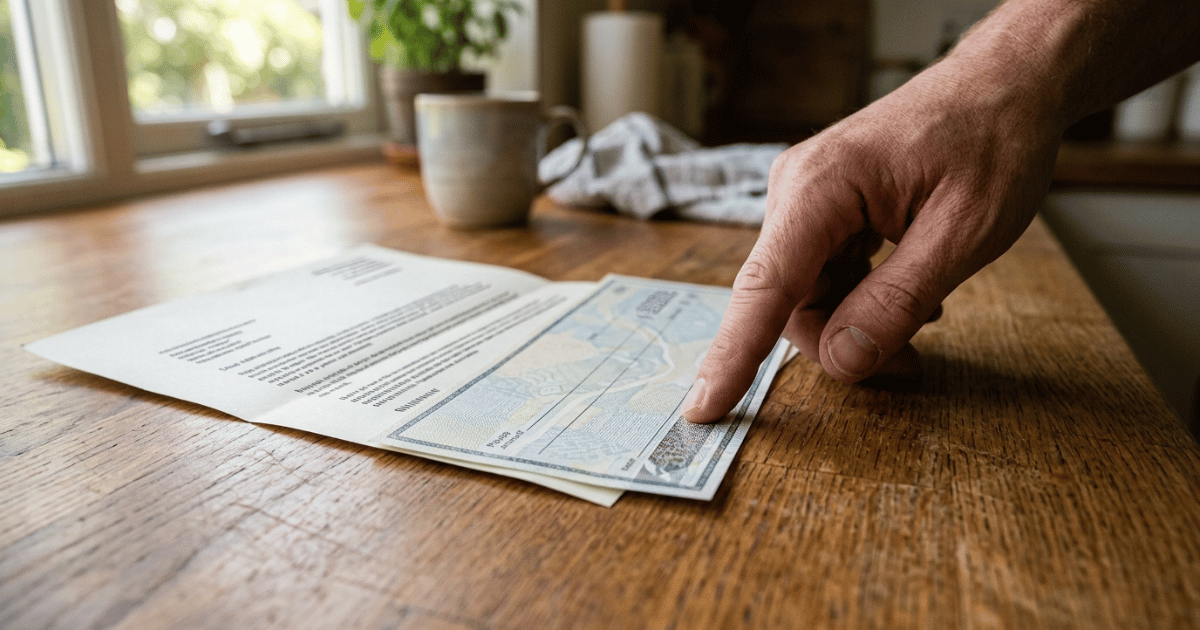
Verify step 1: the case name and the court
The check stub or the accompanying settlement notice should name a specific case and court. Search that exact case name. A real settlement has a public court record, searchable on the relevant state court’s public portal or, for federal cases, on PACER. A case name that returns nothing, or returns only the letter itself circulating on complaint forums, is the single strongest signal something is wrong.
Verify step 2: the settlement administrator
Most large US class actions are handled by a small number of specialist administrator firms, including Epiq, JND Legal Administration, Kroll, Angeion, and Simpluris. If the letter names one of these (or another administrator), go to that firm’s own official website directly, not through a link or phone number printed on the letter, and search for the case name there. A real administrator will have a dedicated case page listing the exact settlement, the claim deadline, and the distribution method. If the named administrator has no public case page matching the letter at all, that is a second strong signal against it being genuine.
Verify step 3: the check itself
Confirm the issuing bank on the check is a real, operating bank; a legitimate settlement administrator issues checks through an actual financial institution, not an unnamed one. According to FTC guidance on fake check scams, a bank clearing a check and making funds available temporarily is not the same as the check being confirmed good; a fake check can appear to clear and still bounce days later, leaving the depositor liable for the amount. Unusually large payout amounts relative to a small, low-value original claim are also worth treating with more scrutiny before depositing.
The scam versions to recognize immediately
Fake settlement-check schemes generally share the same handful of patterns, and any one of them is reason enough to stop before depositing anything:
- “Cash the check, then send part of it back”: by wire, gift card, or a payment app, framed as a tax, processing fee, or overpayment correction. Legitimate settlement administrators never ask a claimant to return part of a payment this way.
- A request for a Social Security number or full bank account number “to verify eligibility” before the funds can be released, when the check has already been mailed. A real distribution does not need eligibility re-verified after the check is already in your hand.
- A processing or release fee, in any amount, required before the funds can be used. The FTC is explicit that real settlements never charge claimants a fee to receive money they are owed.
Why the return address matters here too
Settlement checks and their accompanying notices are mailed the same way as any other high-volume correspondence: from a PO Box, often through the administrator rather than the defendant company directly, and sometimes with a Dept number tied to the specific case. If the box on the envelope itself is unfamiliar and you want to confirm who actually mails from it before trusting the enclosed check, the identification method (search queries, state registries, and the official USPS route) is covered in how to find out who owns a PO Box. A confirmed, real administrator address is a meaningfully stronger signal than a case name alone, because it ties the physical letter back to a specific, checkable organization rather than just a story told inside it.
Cashing it: what it does and does not mean
Accepting and cashing a genuine settlement check may, depending on the specific settlement’s terms, count as accepting the settlement and its release of claims. This is not something to decide from general knowledge or from what one article says universally applies. This site is not a law firm and does not give legal advice; if what a settlement check means for a legal claim matters to you specifically, that question goes to the settlement administrator’s own FAQ for the case, or to an attorney, not to a generic guide.
FAQ
Do I owe taxes on a class action settlement check?
It depends on what the settlement compensates for; some categories of settlement payments are taxable and some are not under IRS rules. This varies by case and is worth confirming with a tax professional or the IRS’s own guidance rather than assuming either way.
What if the check bounced after I already spent some of the money?
Stop spending immediately, contact your bank, and report it to the FTC. A bounced check that already cleared temporarily can leave you responsible for repaying the bank, which is exactly why verifying before depositing matters more than verifying after.
What if the claim deadline on the letter has already passed?
Contact the settlement administrator directly through their official site, not the letter, to ask whether late claims are still being processed for that case. Policies vary by settlement and are set by the court-approved settlement terms, not by this site.
Is it normal to receive a settlement check without ever filing a claim?
Yes, for settlements using automatic distribution, where the defendant already had sufficient records to identify and pay class members directly. That alone is not a sign of anything being wrong.
Where can I double-check a settlement is genuinely real?
The case’s own court docket (state court portal or PACER for federal cases), the named administrator’s official website, and consumer resources like the FTC’s consumer alerts are all independent of the letter itself and worth checking before depositing anything.
Before you decide what to do with the letter itself
Verifying the check is one part of a broader decision about mail you didn’t expect. If the return address on the envelope itself is unfamiliar, the identification method in how to find out who owns a PO Box and the general decision path in letter from an unknown sender cover the rest of that question.
Sources: FTC: how to spot, avoid, and report fake check scams · PACER: federal court records · This site’s Editorial Policy and Disclaimer; nothing on this page is legal or tax advice.